

ALLEN FOAM INSULATION
SPRAY FOAM & INSULATION SERVICES
SEE WHY ALLEN TRUSTS US
Does your Allen home have insufficient insulation? We can enhance your comfort and reduce your energy expenses by ensuring proper insulation. All homeowners rely on us for quick solutions delivered by our dependable and trustworthy experts who complete the task correctly while showing respect for the home and property. We simplify the scheduling of insulation services, ensure customers are kept updated throughout the process, and provide a guarantee for our work.
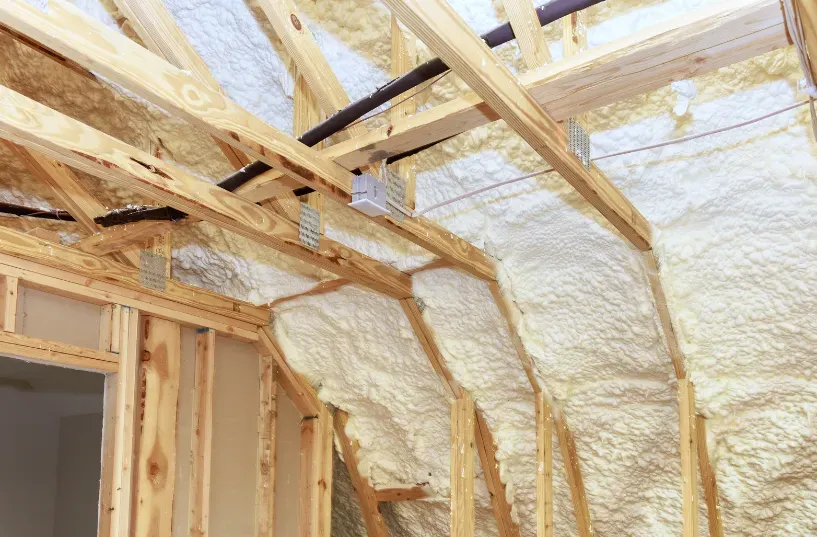

Tell us what your home in Allen requires for insulation, and ask us for a complimentary estimate.
Spray Foam & Insulation Services in Allen, Texas
TURN TO US FOR PROFESSIONAL INSULATION NEEDS IN ALLEN
Not every DIY homeowner finds using foam insulation to be a straightforward job. Every job requires a distinct set of skills and comprehension of the products. Some jobs are finished by spraying foam continuously until completion, while others need small amounts to be sprayed and allowed to cure before adding more foam insulation. Trust our professionals to ensure that the work is completed with expertise and adjacent areas are always protected.
DISCOVER THE BENEFITS OF SPRAY FOAM INSULATION
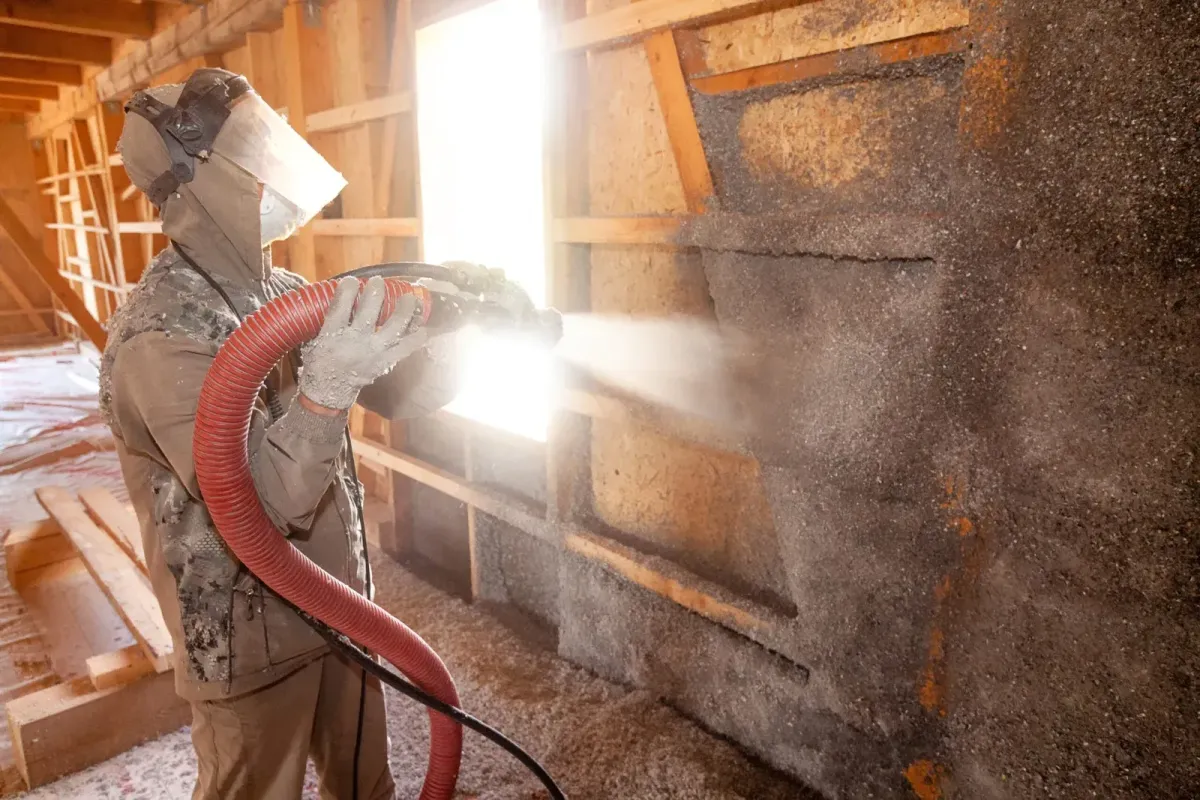
Basements, attics, and crawl spaces are among the areas most frequently insulated. When it comes to insulating areas of your home that are difficult to access and not already insulated, foam insulation is the best option. With materials ranging from fiberglass to rock wool to recycled cellulose, foam insulation can be sprayed easily and immediately impact the comfort of a room and your home environment overall. Another terrific reason to add foam insulation is the lower energy costs to heat or cool your home as seasons change.
HOW SPRAY FOAM INSULATION WORKS
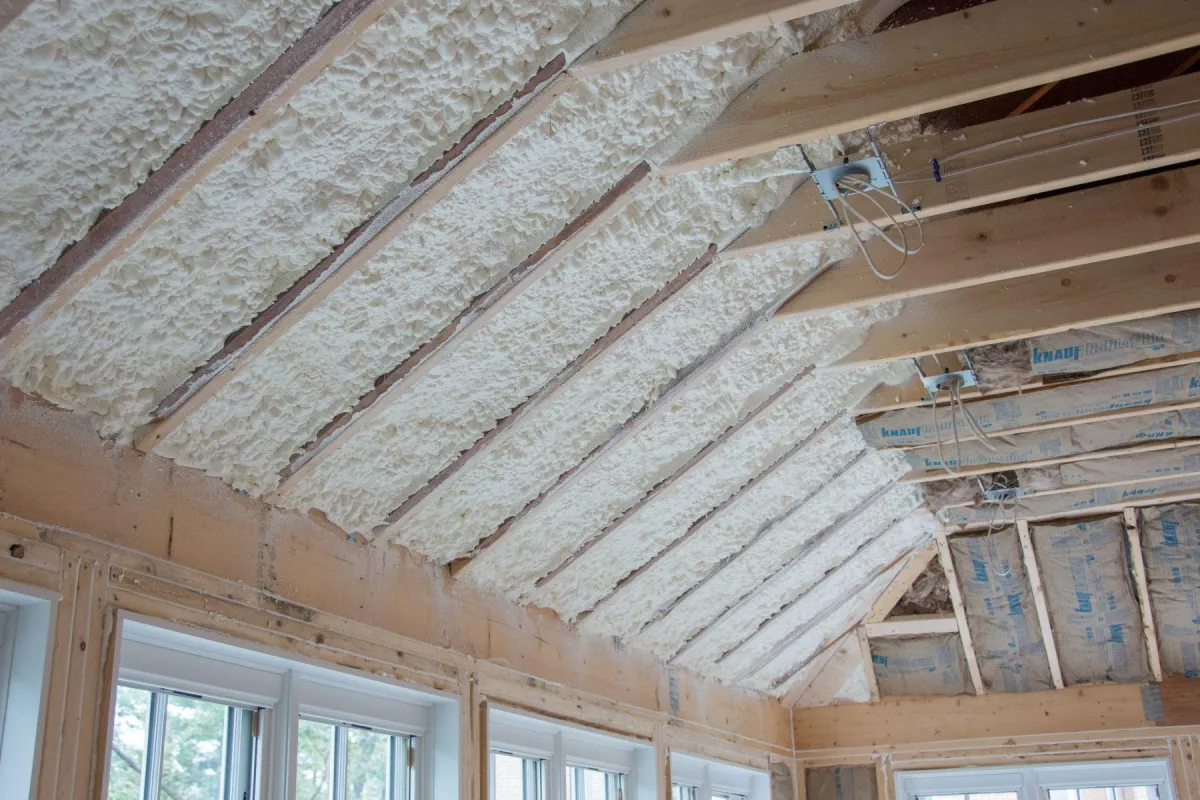
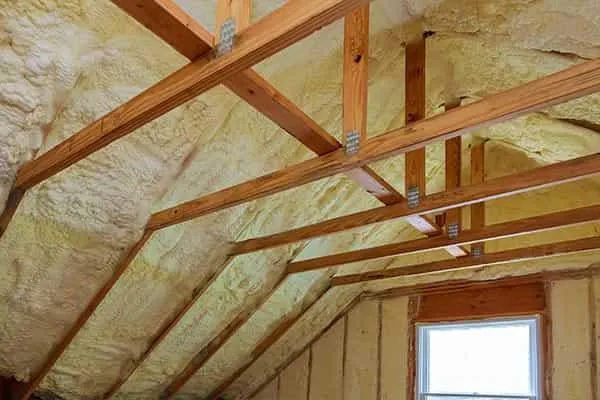
Spray foam is applied as a liquid to fill open spaces within your home. As it grows beyond its initial dimensions, it takes on the shape of the surrounding area. The size of the hardened material can be 30 to 120 times greater than its original size, depending on the type used. Unlike other forms of insulation, a solid, thick coating of foam insulation never sags or settles over the course of time.
MAIN BENEFITS OF SPRAY FOAM INSULATION
Spray foam insulation offers a multitude of benefits. Key advantages include lowering energy expenses, enhancing comfort levels, and providing soundproofing for residences close to sources of noise such as highways, railway lines, or industrial zones. Another advantage is the regulation of moisture within a residence, which diminishes the likelihood of mold development. Remember that when you opt to install new insulation in your home—whether it’s a newer property or an older one—there may be federal tax credits available to you.
INSULATE MORE THAN WALLS WITH SPRAY FOAM
Spray foam serves multiple functions, making it a useful resource for homeowners in applications beyond just wall insulation. Knowing which needs necessitate a lower-expanding form of spray foam is crucial. These applications are distinct from utilizing a larger expanding product. To get rid of the rattling, we can use spray foam to fill the space between a rattling pipe or thumping HVAC vent and the surface it’s making noise against. Foam insulation can also be used to silence a noisy metal sink, and spray foam can help stabilize both faucets and shower heads.
Our Types of Services
Foam insulation serves as a highly effective and adaptable solution for residential, commercial, and industrial structures. There are various types of foam insulation services available, depending on the structure's needs and budget. Each offers unique benefits in terms of energy efficiency, moisture control, and noise reduction.
Wall Insulation
Vented Attics & Crawl Spaces
Unvented Attics
Ducts and Ceiling
Roofs and Outdoor Needs
TYPES OF SPRAY FOAM FOR HOMES
Two types of spray foam are offered: open-cell and closed-cell. While both varieties create air barriers to enhance a home’s energy efficiency and air quality, they are not interchangeable. Our experts can assist you in determining which option meets your home's needs to ensure compliance.
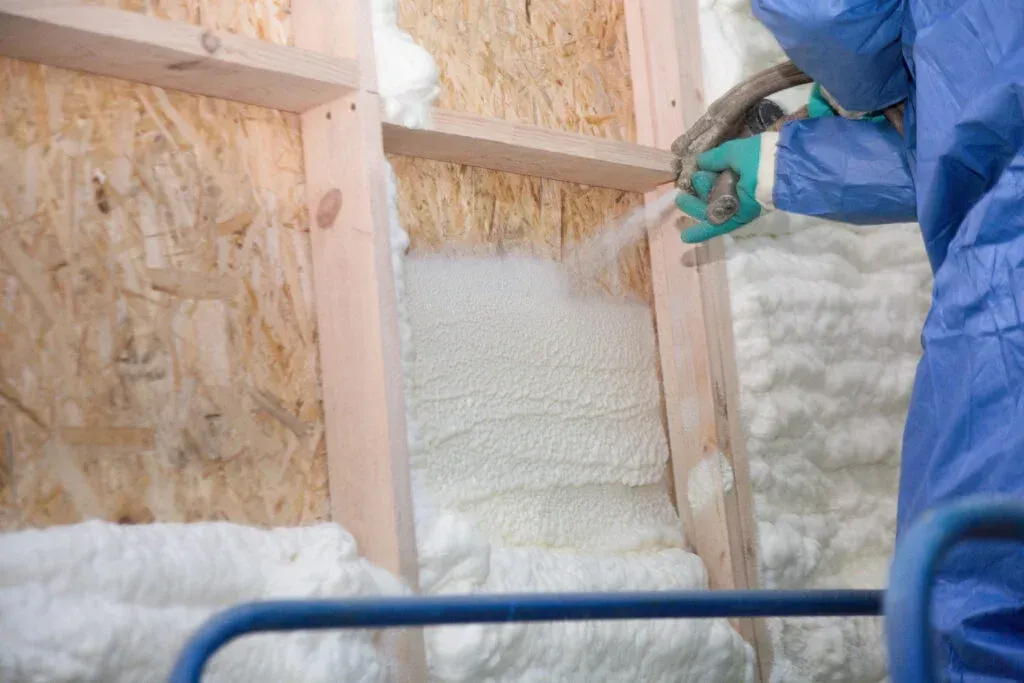
Closed-cell foam is the thicker variant of spray foam. Its formula contains no space or air between cells. Its greater density and rigidity make it perfect for retaining heat. It is the recommended type when a wall’s depth has an impact on R-value requirements in the building code, due to its superior insulating capability.
The option that is lighter and more flexible is open-cell foam. When utilized, it forms an airtight seal to help stabilize the temperature in your home. It is perfect for attics, rim joists, crawl spaces, and open wall cavities. This material is less expensive, and if it gets wet, you can let it dry without having to replace it.
FOAM INSULATION CONTRACTORS | ALLEN FOAM INSULATION | ALLEN, TEXAS
Testimonials
Because of valuable feedback from Jupiter residents like you, we can continue to improve our services. Please contact us immediately if you have any feedback on the specific concrete repair or installation project that we completed at your home. Your positive feedback on social media and review sites is much appreciated. Letting your neighbors know about your interaction with our professionals and the results of the repairs or installation is a valuable resource for other Jupiter residents when they begin looking for local concrete services.


John doe

Lorem ipsum dolor sit amet, consectetur adipiscing elit, sed do eiusmod tempor incididunt ut labore et dolore magna aliqua. Ut enim ad minim veniam.

John doe
Lorem ipsum dolor sit amet, consectetur adipiscing elit, sed do eiusmod tempor incididunt ut labore et dolore magna aliqua. Ut enim ad minim veniam.

John doe
Lorem ipsum dolor sit amet, consectetur adipiscing elit, sed do eiusmod tempor incididunt ut labore et dolore magna aliqua. Ut enim ad minim veniam.